Current Affairs


Sunday, January 18, 2015

The Ebola Survival Handbook: An MD Tells You What You Need to Know Now to Stay Safe

Joseph Alton, MD (Get this book)
As the Ebola epidemic becomes more frightening--and hits closer to home--people are looking for answers. How does it spread? Are we at risk? How do we protect ourselves and our families from this deadly disease? In this necessary new book, Dr. Joseph Alton, an MD who is at the forefront of crisis medicine, explains the virus, how it spreads, how to prevent infection, and what the right treatment protocol is if the virus is contracted. He explains in easy-to-understand language the latest research on how Ebola is transmitted and treated, including late-breaking research from the University of Minnesota that shows it may be transmissible by air.

As the Ebola crisis unfolds with increasing severity and an exponential mortality rate, it is becoming more obvious that our government does not have the skills and resources to protect us in the event of a fast-moving pandemic. This book should be required reading for anyone who wants to ensure the health and safety of themselves and their loved ones. (Publisher)

Saturday, January 3, 2015

America in Retreat: The New Isolationism and the Coming Global Disorder

Bret Stephens (Get this book)
In his first book, the Pulitzer Prize-winning foreign affairs columnist for the Wall Street Journal surveys the tumultuous international scene and calls for America to do what great nations have always done: Lead. By any objective measure, writes Stephens, the United States is not in decline. We'll be the world's leading power for decades to come, the chief adversary for the likes of China, Russia and Iran, and "the preferred target for any ambitious terrorist group." For the past 10 years, however, the nation has been in retreat, shrinking from international responsibilities. In this mostly persuasive polemic, the author outlines the persistent tension in our history-in both major parties-between the impulse to retire entirely from the world or to try to save it. A provocative, carefully reasoned argument, anathema to politicians as disparate as Barack Obama and Rand Paul.--Kirkus

Saturday, December 27, 2014

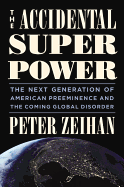
The Accidental Superpower: The Next Generation of American Preeminence and the Coming Global Disorder

Peter Zeihan (Get this book)
Geopolitics, the influence of geography on nations, made the United States great and will keep it there, writes the author of this ingenious, optimistic overview of America's superpower status. Zeihan, founder of Zeihan on Geopolitics, adds that America hit the jackpot, geopolitically speaking, inheriting ."..the best lands in the world for a very low price in terms of blood, treasure, and time." He downplays the claim that American power is declining, pointing out that in 1945, we produced one quarter of the world's gross domestic product and spent as much on the military and controlled as much naval tonnage at the rest of the world combined. The change in 2014: zero. But some things are changing. Resources are diminishing, energy prices are rising, and demographics are inverting. Baby boomers are now retiring to collect benefits paid for by a shrinking number of younger, working taxpayers. Historical prognostication has a dismal record, but readers will find it difficult to put down this fascinating addition to the "rise and fall of nations" genre. Historical prognostication has a dismal record, but readers will find it difficult to put down this fascinating addition to the "rise and fall of nations" genre.--Kirkus

Saturday, December 6, 2014

The Evolution of the Global Terrorist Threat: From 9/11 to Osama Bin Laden's Death

Bruce Hoffman (Get this book)
The world's leading scholars of terrorism investigate the organizational structures and operational links of Islamist terrorist movements around the globe. With contributions from 25 researchers, this richly annotated, scholarly compilation analyzes two dozen attacks and attempts in the West and the Muslim world, from highly successful bombings to plots derailed before they posed a major threat.While events since the death of bin Laden have complicated the picture, this book serves as a useful starting point for readers who wish to understand how to unravel and defuse terrorist threats.--Kirkus

Sunday, November 23, 2014

The Stranger: Barack Obama in the White House

Chuck Todd (Get this book)
Todd, the newly minted "Meet the Press"host and former NBC chief White House correspondent, provides an even-handed, concise, and thorough account of President Obama's first six years in the Oval Office. Todd frames his perspective with his choice of title President Obama "came to Washington on the strength of being a stranger to the city and to the political elites, but it hasn't always served him well." He covers in great detail the die-hard obstructionism, exemplified in Sen. Mitch McConnell's proclamation that his priority was to deny Obama a second term, that has characterized the Republican response to the president's agenda. There isn't a lot here that will be news to readers who follow politics closely no Bob Woodward type revelations but the thoughtful organization of material make this as good a summation of Obama's successes and failures, and the reasons for them, as anything else out there.--Publisher's Weekly

Saturday, November 8, 2014

Predator: The Secret Origins of the Drone Revolution

Richard Whittle (Get this book)
They may soon be delivering this book to you, but for now, drones are anything but your friends. Put a laser, a cannon and some Hellfire missiles into an unmanned aircraft, and you have a potent killing machine. The impulse to create the unmanned drone came from an Israeli lab in response to a quite specific problem: namely, Soviet rockets with multistage radars aimed at Israeli jets by Syrian and Egyptian fighters. There's plenty of geekery befitting a Tom Clancy novel to keep readers entertained, with Whittle occasionally sliding into jargon-y prose. Such longueurs aside, Whittle's account comes to a pointed conclusion: Drone technology has already changed how we die, but what remains to be seen is how it "may change the way people live." For students of technological history and political wrangling alike, the book is endlessly interesting and full of implication.--Kirkus

Thursday, October 30, 2014

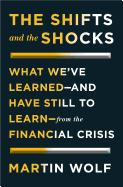
The Shifts and the Shocks: What We've Learned--And Have Still to Learn--From the Financial Crisis

Martin Wolf (Get this book)
An editor for the Financial Times weighs in with a scholarly analysis of what caused the financial collapse of 2008 and provides suggestions to prevent a recurrence. Wolf offers a highly organized, detailed and, at times, somewhat dense text-at least for general readers. It's also a text with attitude. Although his view is global, he focuses often on the United States and on the United Kingdom and discusses sharply how (in the U.S.) partisan politics often trumped common sense before, during and after the crisis. He argues throughout that austerity plans were exactly the wrong things to implement and that government stimulus plans were too small to be as effective as they could have been. Closely reasoned, highly organized and logical-and stiffly challenging.--Kirkus