By Liza Mundy
"Nearly 40 percent of married women in the U.S. earn more than their
husbands. They exemplify a trend that has been increasing and promises
major changes in the economy, the workplace, and the home. In the
future, women will make the major decisions in corporate America and at
home as they wield their greater spending power and authority at work.
How will men react? Mundy interviewed women and men of various
backgrounds, across the U.S. and abroad, to establish that the trend has
caught many off guard. Having grown up expecting that the man would be
the major breadwinner, those in higher-earning-woman couples are
adjusting to a new reality. Mundy profiles couples coping with
higher-earning women and stay-at-home dads to show how role reversal has
strained some relationships and strengthened others. She explores the
reasons behind the trendthe decline of male-dominated job sectors; the
rising education of womenand the ultimate impact on greater society.
With women earning more than men, will we value money less and
childrearing more? Will the war between the sexes escalate? A
fascinating look at a trend that promises major social changes." (Booklist) Check Our Catalog
Current Affairs
Monday, April 23, 2012
Thursday, April 19, 2012
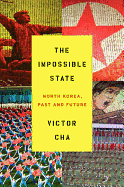
The Impossible State: North Korea, Past and Future
By Victor Cha"From the former director of Asian Affairs at the National Security Council, an eye-opening view of the closed, repressive dictatorship of North Korea. Cha (Foreign Service/Georgetown Univ.; Beyond the Final Score: The Politics of Sport in Asia, 2008, etc.) first visited North Korea during George W. Bush's second term with then-governor of New Mexico Bill Richardson to try to defuse nuclear-testing tensions. The author was amazed at the chasm between party haves and everybody else, confirming all that he knew about the authoritarian country. Cha aims to get at some of the pressing questions since Kim Jong-il's death and the succession of the utterly unknown younger son, Kim Jong-un--e.g., what happened to this once-vigorous dictatorship, and why does the populace do nothing about it? How can the West know so little about what really goes on there? For Cha, the key that unlocked the regime's secrets was its nostalgia for the good old days of the 1950s and '60s, when China and the Soviet Union were bolstering North Korean industry and military, while the South was still an agrarian backwater. American aggression during the Korean War left a lasting bitterness, and while the South was grappling with American ambivalence toward its leaders, the North under Kim Il-sung embraced the ideology of juche, or self-reliance, and the cult of the Great Leader. As a result, writes Cha, the North Koreans are simply too oppressed to revolt--not to mention the devastating effects from "Olympic envy" of trying to catch up to Seoul's 1988 hosting, and the terrible famine of the mid '90s. The author looks closely at the Kim family, the terrible economic decisions that plunged the country into poverty, the shocking gulag system, its paranoid nuclear proliferation program and the tenuous relations with South Korea. A useful, pertinent work for understanding the human story behind the headlines." (Kirkus Reviews) Check Our Catalog
Thursday, April 12, 2012
The AIDS Conspiracy: Science Fights Back
"Nattrass (economics, Univ. of Cape Town) here exposes the antiscience
consequences of AIDS denialism and AIDS conspiracy theories. By claiming
that HIV doesn't cause AIDS, denialists undermine HIV prevention work
and cause more infections among adherents by influencing them not to
take precautions against HIV. Thousands died in South Africa when
President Thabo Mbeki advised citizens not to take antiretroviral drugs.
Nattrass describes the strong social components of AIDS denialism,
which typically centers on four players: the hero scientist (e.g.,
denialist Peter Duesberg), the "cultropreneur" (e.g., those who exploit
HIV patients by condemning antiretroviral medicine and selling herbal
remedies instead), the living icon (HIV-positive people who offer
themselves as proof that HIV doesn't cause AIDS), and the praise singer,
such as those who produce films praising the denialism. VERDICT
Focusing mostly on the United States and South Africa, this book is
readable and compelling though written in a scholarly style. A
remarkably well-argued case against unscientific approaches to AIDS and a
brilliant defense of evidence-based medicine. A must-read for all who
study AIDS history.-" (Library Journal) Check Our Catalog
Trickle Down Tyranny: Crushing Obama's Dream of the Socialist States of America
Host of the No. 3 radio program in the nation, heard by nearly eight
million listeners a week and syndicated across the United States in over
300 markets, Savage continues his rant against "Barack Lenin." Not a
book to make everyone happy, but the 250,000-copy first printing and
one-day laydown on April 3 indicates that the audience will be large.(Library Journal) Check Our Catalog
Drift: The Unmooring of American Military Power
"On her MSNBC show, Maddow delights in reminding viewers that she's an
infrastructure geek. Now, regarding two manifestations of U.S.
infrastructure--the Constitution and our underlying methods, post-JFK,
of supporting U.S. military incursions--she shows how we have drifted
away from established templates outlining how this country goes to war.
She begins with LBJ in Vietnam (he used only active duty
servicemen--thus the draft--to avoid Guards and Reserves bringing the
war home around the country). From President Carter she segues to
President Reagan, studying aspects of his military (mis)deeds in four
core chapters. After an analysis of George H.W. Bush and Desert Shield
comes her look at "Doing More with Less (Hassle)," a particularly
horrifying study of what our outsourcing of military "quality of life
services" has wrought. Maddow wears her expertise lightly,
counterbalancing hard details with phrases (e.g., "the
lemons-into-lemonade-moment" or "the
sliding-off-the-aircraft-carrier-thing") that keep her narrative
invigorating even as she offers the occasional periodic sentence that
would make Gibbon proud. VERDICT Maddow can be sassy, but she's deadly
serious. Having noted our executive branch's growing disregard for "the
disincentives to war deliberately built into our American system of
government," she ends with a to-do list for finding our way back to a
reasonable national security state. Highly recommended to all readers
engaged in the world today and with how we got here." (Library Journal) Check Our Catalog
Wednesday, April 4, 2012
Life Among the Cannibals: A Political Career, a Tea Party Uprising, and the End of Governing as We Know It
By Arlen Spector
"Though the winners generally write the history of events, Specters account of the campaign loss that ended his 30-year Senate career is proof that a few parting words can serve as a pointed political epitaph. In this engaging, but heavy-handed look at the disappearance of the center in Republican party politics, Specter (Never Give In: Battling Cancer in the Senate) lays bare his resentments, and offers his knowledgeable, withering critique of brutal partisanship in national politics. After five terms as a liberal Republican, Specter famously and critics said, desperately switched parties and ran for re-election as a Democrat in 2010, prompting one disgruntled voter to call him a political transvestite as he headed to an electoral defeat. Describing the GOPs decades-long rightward drift, Specter engages in much score-settling and self-justification, from noting that Richard Nixon urged civility in his 1969 inaugural address to dismissing Sen. Jim DeMint (R-S.C.) as a scorched earth partisan, and suggesting that his successor, Sen. Pat Toomey has a reputation, as being, foremost, out for himself. Specters basic message, though, is one of concern. The vitriol and hatred on all sides is overwhelming, he writes, and from a man overwhelmed by heightened partisanship, the warning carries the weight of experience." (Publishers Weekly) Check Our Catalog
Why It's Kicking Off Everywhere: The New Global Revolutions
By Paul Mason
"A first-hand witness to the protests in Cairo, Mason (Live Working or Die Fighting) dissects the revolutionary events of 2011 in Egypt, Britain, Greece, and America, before moving on to discuss the history, sociology, economics, and politics of unrest. From the 1848 "wave of revolutions" across Europe, to the French, Czechoslovakian, and American protests of 1968, Mason posits a common cause: the disconnect between the masses and the political systems and power structures. At the forefront of these modern uprisings are unemployed youth, the urban underclass, and organized labor. Armed with technology and social mediaa cell phone video cameras, Twitter, YouTube, etc.a protestors are able to mobilize sans central leadership, broadcast without Big Media mitigating their message, anda perhaps most importantlya use digital space to take to the physical streets. Mason gets bogged down in discussing the sociology of poverty and enumerating individual cases of the poor struggling to succeed, but overall his study stands as a good primer on a young revolution and its predecessors, and where we might go from here." (Publishers Weekly) Check Our Catalog
Subscribe to:
Posts (Atom)