Current Affairs


Wednesday, August 17, 2011

Can Intervention Work? ( Amnesty International Global Ethics )


By Rory Stewart
"A sober assessment of what "intervention" can and cannot accomplish.
British Parliament member Stewart (The Places In Between, 2006, etc.) and Knaus, the founding chairman of the European Stability Initiative, are not opposed to intervention per se, but they argue that many of its premises, and certainly the implementation, are faulty. Stewart takes up failures in execution of intervention especially in Afghanistan, and Knaus shows that the Bosnian precedent, often considered a model for success, was anything but. In Afghanistan, there is a mismatch between means and ends—the spending of $14 billion per year just on training the military and police cannot be sustained by a government with a budget of just $1 billion per year. Knaus deconstructs a succession of untruths or exaggerations about the Balkans War, where the so-called Brcko model was based on giving plenipotentiary or almost vice-regal powers to an administrator. After becoming generalized there, the program was transferred to Iraq, along with personnel, under the Coalition Provisional Authority. Knaus shows that the successes attributed to the model are largely mythical and that what was accomplished by the CPA was based largely on models other than those implemented in Bosnia. Stewart and Knaus stress that lip service to rhetorical or administrative formulas and standards and exaggeration of threat and achievement are no substitutes for truthfulness.
Two experienced authors effectively identify what those who decide to make such interventions require for success, that what is required often does not exist and that brute force is not a viable alternative."  (Kirkus Reviews)   Check Our Catalog

State vs. Defense: The Battle to Define America's Empire


By Stephen Glain
"The image of the U.S. around the world is projected not by diplomats or doctors but by soldiers, a presence more consistent with an empire than a republic, asserts foreign correspondent Glain, who spent 14 years in Asia and the Middle East. Because of its budget and political clout, the Defense Department has come to have a greater presence abroad than the State Department. U.S. military forces abroad grew significantly during the Cold War and the heightened sense of a Communist threat and hasn't receded with the collapse of the Soviet Union. Indeed, it threatens to fan aggression with China. The U.S. has neglected the budgets of diplomats and allowed language skills and morale to erode even as it has failed to adapt to changing geopolitics that include rising regional powers, Glain says. He analyzes U.S. defense policy since 1947, showing how we have arrived at our current situation of having a volunteer military and a civilian population with little connection to war other than through paying the enormous financial price of supporting it."  (Booklist)  Check Our Catalog

Monday, August 8, 2011

Three Famines: Starvation and Politics

By Thomas Keneally
"Famines are often classified as natural disasters, brought on by causes as various as drought, crop infestation, and flooding. This masterful study of three modern famines confirms that causation is often more complicated. Keneally examines the Irish potato famine that began in 1845, the 1943 Bengal famine, and recurring famine in 1970s and '80s Ethiopia. In each case, nature played a role in triggering a disruption in the supplying of food. But actions, inactions, indifference, and incompetence on the part of governments intensified the problems, leading to the avoidable demise of millions."  (Booklist)  Check Our Catalog

Wednesday, August 3, 2011

The Pirates of Somalia: Inside Their Hidden World

By Jay Bahadur
"Bahadur delivers a riveting narrative expos--the first ever--that examines Somalian pirates, how they live, the forces that have created piracy in Somalia, how they spend the ransom money, and how they deal with their hostages."   (Publisher Description)  Check Our Catalog

The Missing Martyrs: Why There Are So Few Muslim Terrorists

By Charles Kurzman
"Kurzman, a professor of sociology at the University of North Carolina, Chapel Hill, poses a provocative question: given anti-Western sentiment in many parts of the Muslim world and the ease of committing violent acts, why do so very few of the world's billion-plus Muslims turn to terrorism? The author's answers to this intriguing question take the reader through a history of "liberal Islam"defined as distinctly Islamic discourse about key ideals from Western liberalism such as human rightsa close examination of the role of radical Islam in the Muslim world and the backlash against it; and an exploration of what he calls "radical sheik," or the "cool" factor of Islamist leaders like Osama bin Laden. Impeccably researched, tightly organized, and enriched by his personal experiences in the Middle East, Kurzman's work is a useful primer on the state of the modern Muslim world as well as a solid argument for re-evaluating the threat of terrorism today and our reactions to it. Though some may disagree with his conclusions, in this lucid call for perspective Kurzman has written an important and timely work that should be appreciated by the expert and layperson alike."  (Publishers Weekly)  Check Our Catalog

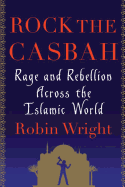
Rock the Casbah: Rage and Rebellion Across the Islamic World

By Robin Wright
"In one of the first of a flood of books that will inevitably follow Osama bin Laden's death and the Middle East uprisings, Wright (Dreams and Shadows: The Future of the Middle East, 2008, etc.) delivers the stirring news that jihadism is fading, and Arab nations are finally entering the modern world...More journalism than deep analysis, the book paints a vivid portrait of dramatic changes in the Islamic world that may or may not end well.  (Kirkus Reviews)  Check Our Catalog.

Thursday, July 21, 2011

The Wars of Afghanistan: Messianic Terrorism, Tribal Conflicts, and the Failures of Great Powers

By Peter Tomsen
"Ambassador and special envoy to Afghanistan from 1989 to 1992, Tomsen combines scholarship, analysis, and personal experience in an encyclopedic if disturbing history of post-WWII Afghanistan. Tomsen addresses not only America's ignorance of Afghanistan's complex tribal networks but every previous foreign invader who made that error. America's unique blunder, according to Tomsen, has been outsourcing Afghan policy to Pakistan. At Pakistan's insistence, beginning with the 1979 Soviet invasion, the U.S. funneled aid to the mujahideen through Pakistan's military, which was dominated by radical Islamists. Afghanistan lapsed into lawless warlordism after the Soviet 1989 withdrawal. Then the brutal, Pakistan-supported Taliban took control in 1996. Pakistan, happy at receiving an avalanche of aid after 9/11, says Tomsen, stood by as American-supported rebels routed the Taliban, but resumed support of the Taliban when America turned its attention to Iraq. Tomsen explains how to fix things by "genuine Afghanization and de-Americanization." Most important, we must take back control of Afghan policy, stop praising Pakistan for its cooperation, stop pouring in unconditional military aid, and insist that Pakistan must help stabilize Afghanistan."  (Publishers Weekly)  Check Our Catalog